Sourdough is more than just a bread trend – it's a revival of old baking traditions that everyone's celebrating right now. And honestly? We totally get the hype! Homemade sourdough doesn't just taste incredibly delicious, it's also way easier to digest than industrial yeast bread. And surprisingly, it's really easy to create your own starter! With just flour and water, you'll cultivate a living culture that you feed regularly (yes, a bit like a little pet – just with way less work). And if you take good care of your new family member, it'll supply you with fresh, homemade bread for years to come. We'll show you step by step how it works – let's go!
Which Flour Should I Use?
The classics are organic rye flour type 1150 or organic whole rye flour. Both are particularly reliable and therefore well-suited for beginners, as they have a high extraction rate. This means that these types of flour still contain a lot of the whole grain. That's exactly where most of the wild yeasts and lactic acid bacteria we need for sourdough live. Basically, you can use any flour though. So: the higher the extraction rate, the better for getting started. Also, feel free to look for organic certification. Conventional grain is often treated with agents that kill fungi and bacteria – but we need those for sourdough!
What Equipment Do I Need to Get Started?
Nothing you don't already have at home!
Container: We recommend a small, tall glass to easily observe volume development. This can simply be an old jar with a screw-top lid.
Spoon: Some people think metal could react with the acid or disturb the microorganisms and therefore swear by a wooden spoon. However, a regular stainless steel spoon or silicone spatula are perfectly sufficient.
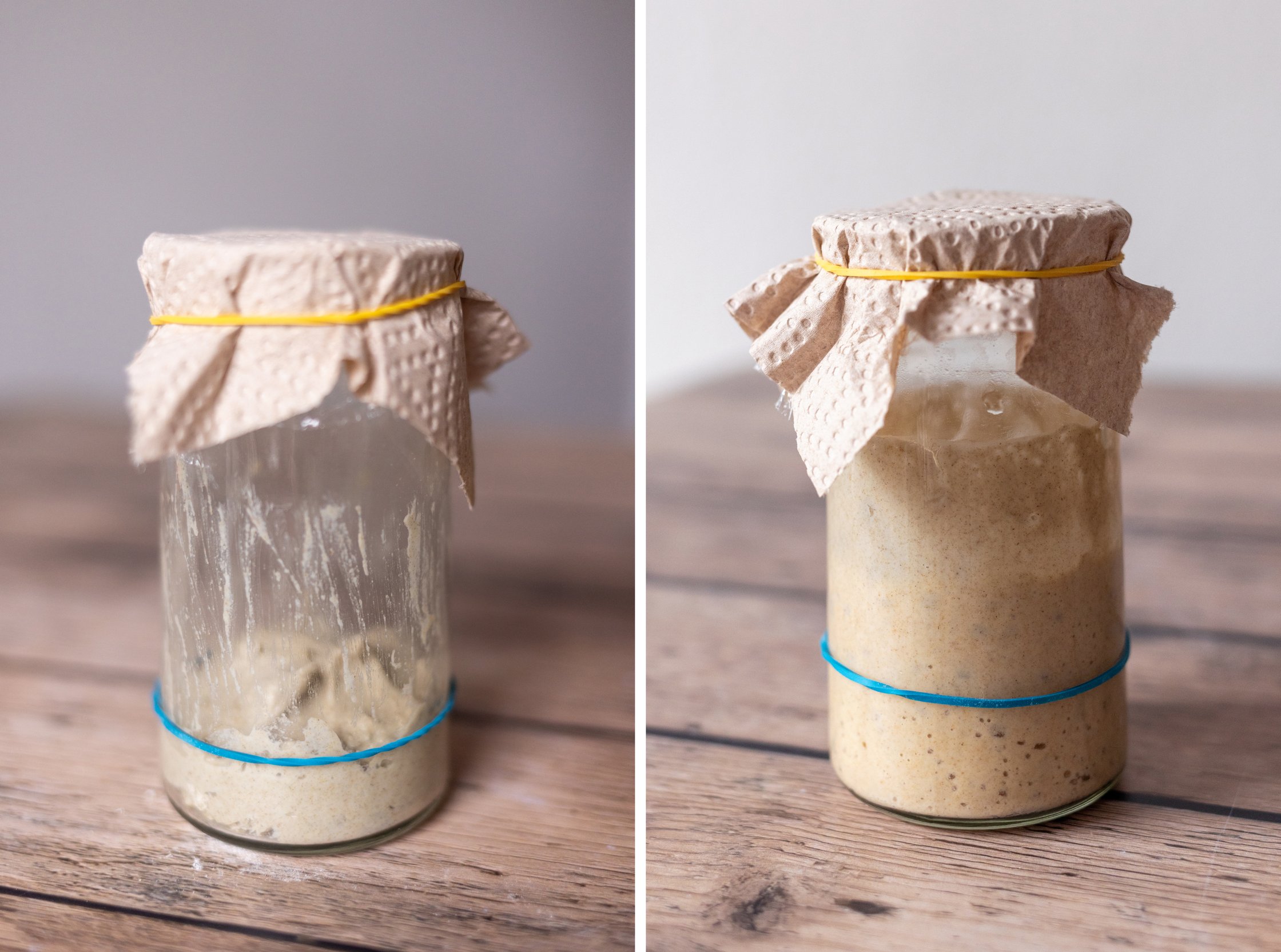
Rubber bands: To check whether the starter has grown, a rubber band is a simple method. If you don't have one on hand, you can also draw a line on the glass.
Cover: Either you place the jar's lid loosely on top, a clean kitchen towel over it or – just like we do – you cover the jar with a piece of paper towel.
Practical Tips, What's important:
Work cleanly: So make sure your jar and spoon are clean every day.
Warm environment: Especially in winter, finding a warm spot for the starter during the resting phase is a challenge. We placed our starter on a kitchen towel on the warm heater. What can happen: The starter dries out on top. You can prevent this by placing a layer of plastic wrap under your actual cover and poking two or three small holes in it.
What Do I Do with the Leftover Starter?
Every day (except the first), sourdough remnants accumulate because only a small portion from the previous day is processed further. However, you don't necessarily have to throw away these remnants. You can also use the so-called discard in crackers, bread, or other baked goods. If you can't use the remnants, dispose of large amounts like this: spread on a piece of paper towel and into the regular trash. Otherwise, sourdough starter likes to clog the drain pipe!
How Do I Know the Starter Has Gone Bad?
Sourdough starters are very robust and rarely go bad. Dark liquid on top, sour/vinegar-like smell, or gray discoloration are completely normal – just stir and feed. The starter is only truly bad if there's mold (fuzzy, colored spots), putrid smell (not just sour, but like garbage/vomit), or pink/orange discoloration. In these cases, you'll have to throw it away and start over. But if it smells sour-fruity-yeasty – keep going!
How Do I Know the Sourdough Starter Is Active Enough?
Your starter is ready for baking when it has doubled 4–8 hours after feeding, is full of bubbles, and shows an airy, fluffy structure. The classic test: a spoonful of starter floats in water – then there's enough gas for baking. This is usually the case 5–7 days after starting.
What Happens After I Get It Started?
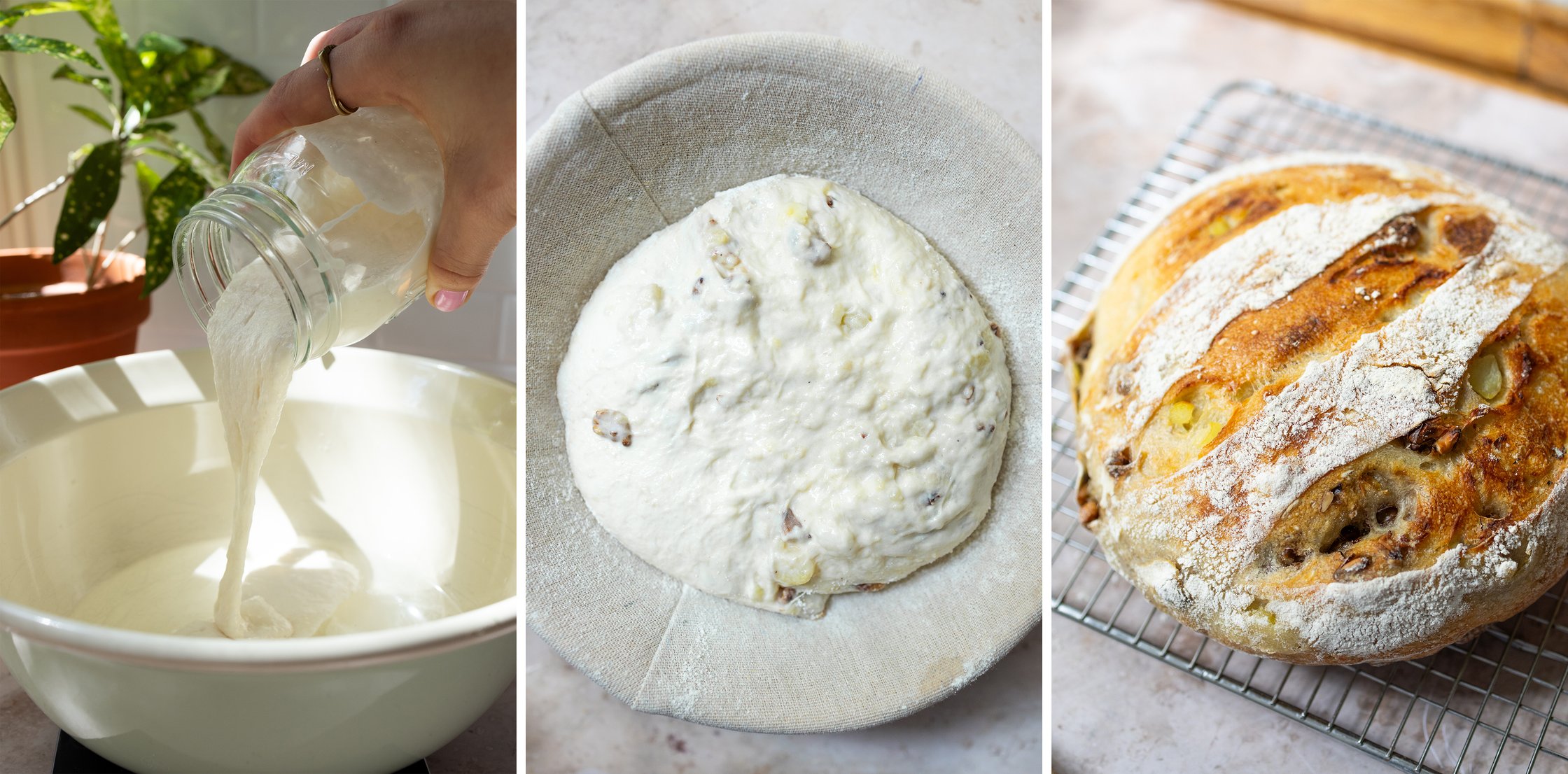
Congratulations, you now have a little new living being at home! Your sourdough now wants to be cared for, which mainly means you'll need to feed it every week. For classic sourdough, this looks like this: mix 1 part starter (e.g., 30 g / 1 oz) with 1 part flour (30 g / 1 oz) and one part water (30 g / 1 oz). After your starter has incorporated its feeding and stood at room temperature for a few hours, it can go back into the fridge. That's basically where it lives, as long as it's not being used for baking. And the most important thing: definitely give your new family member a name! Want to start baking right away? We're already working on beginner sourdough recipes for you. Until then, check out this delicious Potato and Walnut Bread.

Ingredients
####For Starting and Feeding:
organic rye flour type 1150 (alternatively e.g. organic whole rye flour)
lukewarm water
####Equipment:
small, tall glass container
spoon or spatula
rubber band
plastic wrap (optional)
lid, paper towel, or kitchen towel
Instructions
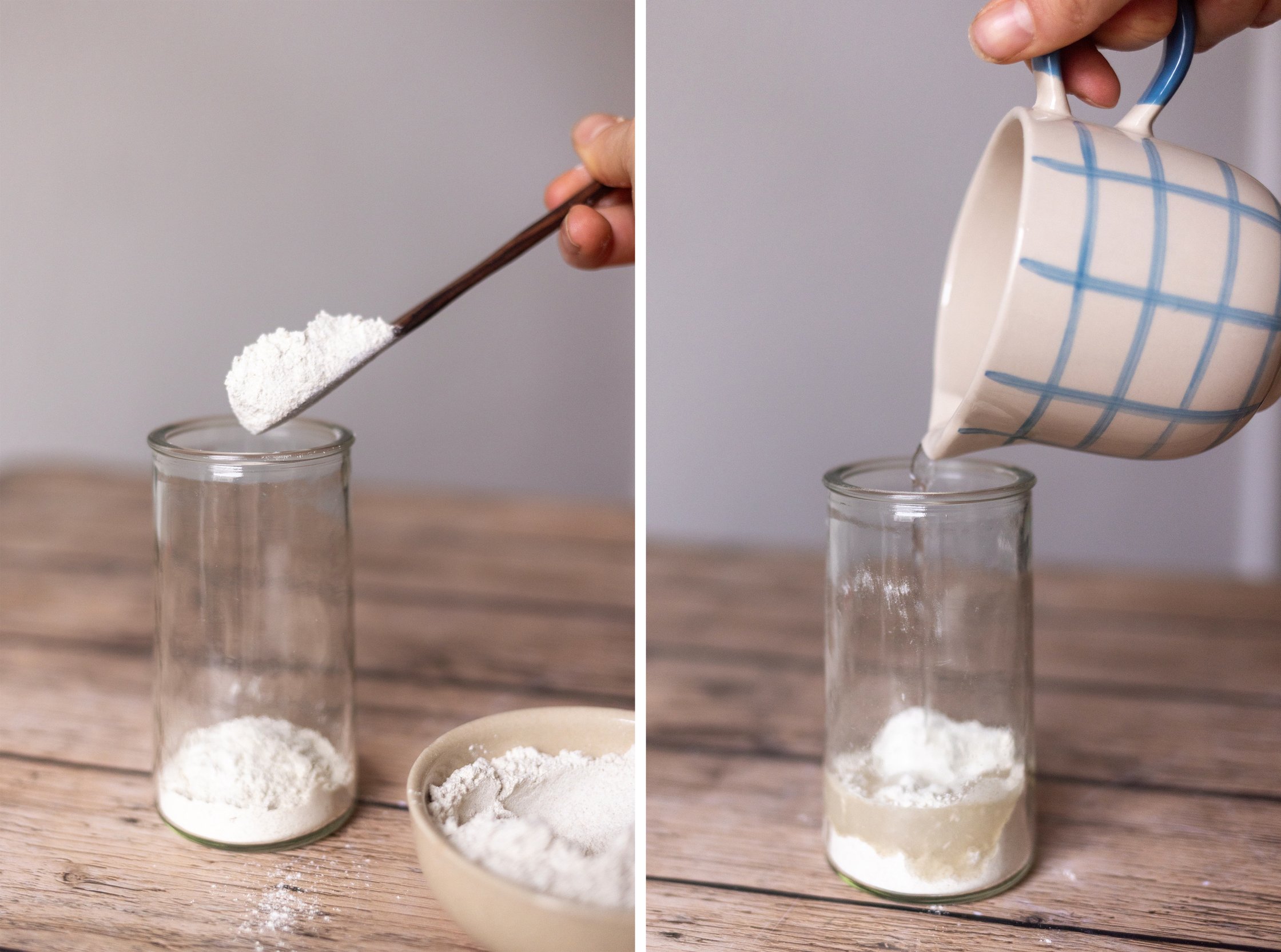
Day 1: Mix 30 g (0.25 cup) rye flour + 30 g (2 tbsp) lukewarm water in the jar. Cover with a piece of paper towel, a clean dish towel, or the jar lid (just place on top loosely) and place the rubber band around the jar at the current fill level. Let the jar stand for 24 hours in a warm place (25-30 °C / 77-86 °F). In winter, it's best to place it on the radiator or nearby.
Day 2:Mix 30 g (2 tbsp) starter (from the previous day) + 30 g (0.25 cup) rye flour + 30 g (2 tbsp) lukewarm water in a new clean jar and repeat the steps from the previous day.
Day 3: Mix 10 g (1 tbsp) starter (from the previous day) + 30 g (0.25 cup) rye flour + 30 g (2 tbsp) lukewarm water in a new clean jar and repeat the steps from the previous day.
Day 4: Mix 10 g (1 tbsp) starter (from the previous day) + 30 g (0.25 cup) rye flour + 30 g (2 tbsp) lukewarm water in a new clean jar and repeat the steps from the previous day.
Day 5: Mix 10 g (1 tbsp) starter (from the previous day) + 50 g (0.5 cup) rye flour + 50 g (3.5 tbsp) lukewarm water in a new clean jar and repeat the steps from the previous day.
Day 6-7: Depending on how active the starter is now (bubble formation and volume), repeat the last step a few more times if necessary. This is now also possible at shorter intervals.
Sourough Bread with Potato & Walnut
Ingredients
For the sourdough:
30 g (1 oz) wheat sourdough starter
30 g (1 oz) water
30 g (1 oz) wheat flour (type 550)
For the dough:
300 ml (1.33 cups) water
60 g (2 oz) sourdough starter
400 g (14 oz) wheat flour (type 550)
8 g (0.25 oz) salt
140 g (5 oz) waxy potatoes
80 g (2.75 oz) walnuts
Also:
rye flour
Instructions
Day 1 (in the morning) - Prepare the sourdough starter:
Mix the sourdough with lukewarm water in a medium-sized tin. Then add the wheat flour and mix again so that no lumps form.
Only put the lid on the tin; do not close it completely. Place the container warmly for about 3–4 hours until bubbles form.
Then, test whether the starter is ready. To do this, fill a glass with water and add a teaspoon of the starter. If it floats, it is usable. If it sinks, it must be returned to the warm place until it is ready.
Day 1 (midday) - Prepare the dough:
Put 275 ml of water (33 °C / 90 °F) with 60 grams of sourdough starter and wheat flour in a large bowl and knead. Cover and leave in a warm place for about 1 hour for autolysis.
Pour the remaining 25 milliliters of water and salt into a glass and swirl to dissolve the salt. After the dough has stood for 1 hour, add the salt water and knead well.
Tip: If the dough is too sticky during the following steps, moisten your hands with water.
Now, fold the dough. To do this, place both hands under the middle of the dough and lift it so that both ends of the dough pull down. Place the dough back in the bowl and change direction the next time. Repeat the folding 4–5 times until the dough is taut. Then, cover the dough, place it in a warm place, and repeat this process four more times at 30-minute intervals.
Meanwhile, bring a pan of salted water to a boil. Peel and chop the potatoes and cook until soft, then drain and mash with a potato masher or fork. The more large pieces of potato you want to end up with in the bread, the less you need to mash them. Roughly chop the walnuts and toast in an oil-free pan. Set both to one side and leave to cool.
The 6th folding is slightly different from the previous times. Place half of the potatoes and walnuts in the center of the dough. Now, pull the two top corners upwards and then fold them downwards over the dough. Turn the bowl 180 ° and repeat the process. Then, fold the remaining two sides inwards. Place the remaining potatoes and walnuts in the middle of the dough and repeat the folding process. Cover the bowl and place in the fridge overnight (at least 12 hours).
Tip: We have linked two videos in the intro that explain the two folding methods.
Day 2 (in the morning) - Prepare the dough for baking:
Take the dough out of the fridge and turn it onto a damp work surface, seam side down. Shape it into a round. The surface should be even and firm.
sprinkle the proofing basket with rye flour and place the dough ball in the basket with the seam facing upwards. Cover with a kitchen towel and leave to stand for approxamatly 60–90 minutes.
Place the cast-iron pan on a rack on the middle shelf in the oven and preheat to 250 °C / 480 °F (top and bottom heat).
Day 2 - Baking:
As soon as the oven and dough are ready, take the pan out of the oven, sprinkle the inside with a bit of rye flour and turn the dough seam side down into the pan. Sprinkle the top of the bread with rye flour and then score it with a razor blade or a sharp knife by about 1 centimeter. Place the lid on the pan and bake the bread at 250 °C / 480 °F (top and bottom heat) for 20 minutes.
Tip: There are many videos on how to score your bread. Be as creative as you like.
After 20 minutes, set the oven to 230 °C / 450 °F, remove the lid from the cast iron pan and bake the bread for another 20 minutes until it is nicely browned. If it is not brown enough, bake for another 5 minutes. The core temperature should reach at least 95 °C / 200 °F.
Turn the bread out of the pan onto a rack and leave to cool completely before slicing.
Comments
More Vegan Bread Recipes
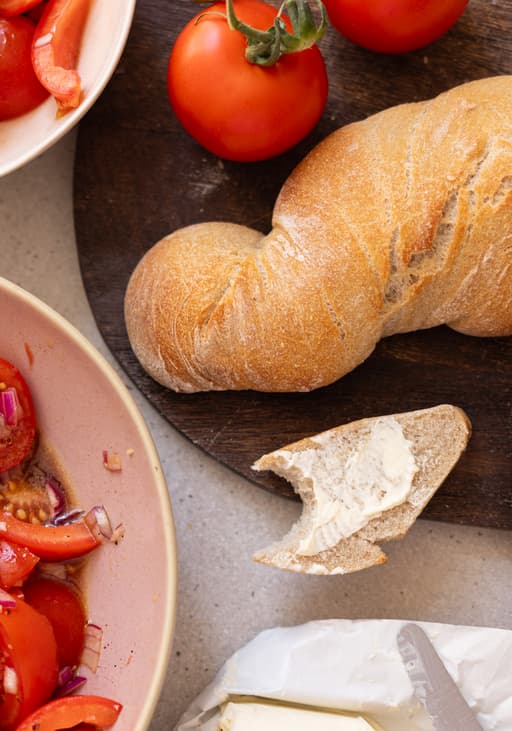
Twisted Sourdough Baguette with Tomato Salad
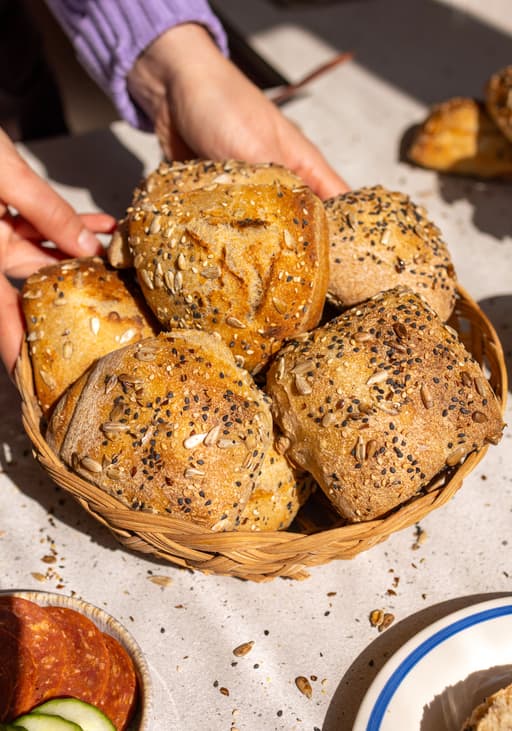
Easy Overnight Sourdough Rolls
Ad
Vegan Halloumi Bread with Tzatziki and Cucumber-Onion-Mint Salad
Ad
Savory French Toast with Vegan Caesar Salad

Ad
Stuffed Pretzels with Cabbage, Creamy Herb Dip and Crisp Radish Salad

Ad
Vegan Cream Cheese Rolls with Garlic Butter
Easy Sunday Rolls

Vegan Scrambled Eggs without Tofu (soy free)

Ad
Homemade Pickle Bread Rolls With Dill
Ad
No Knead Bread With Carrots and Walnuts
Recent Recipes
Ad
Fall Tortellini Casserole with Caramelized Onions

Ad
Vegan German Ham and Egg Sandwich with Fried Pickles („Strammer Max“)

Pumpkin Lentil Soup with Apple and Herb Gremolata

Quick Air Fryer Cinnamon Roll

Ad
Vegan Falafel Platter with Flatbread and Homemade Hummus
Vegan Onion Tart with Shortcrust Pastry
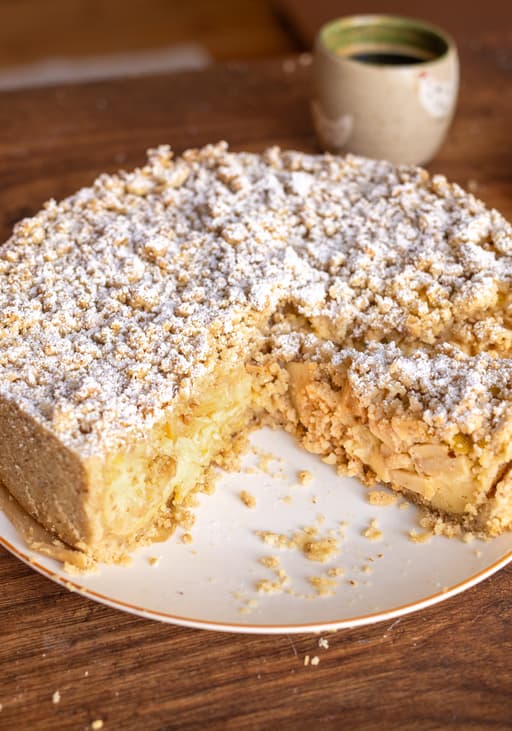
Easy Vegan Apple-Nut Cake with Pudding
Ad
Vegan Granola with Mango & Coconut (in the Air Fryer)
Twisted Sourdough Baguette with Tomato Salad